

















 EVIL BIKES
 MAGURA
























































WARNING:
Unless otherwise specified, titanium fasteners are a suitable alternative to medium strength steel fasteners (8.8). Never apply them where higher strength is required or where failure could result in injury, death or property damage.
Neither the manufacturer nor the seller is liable for any resulting damage to health or life or property. Use at your own risk. 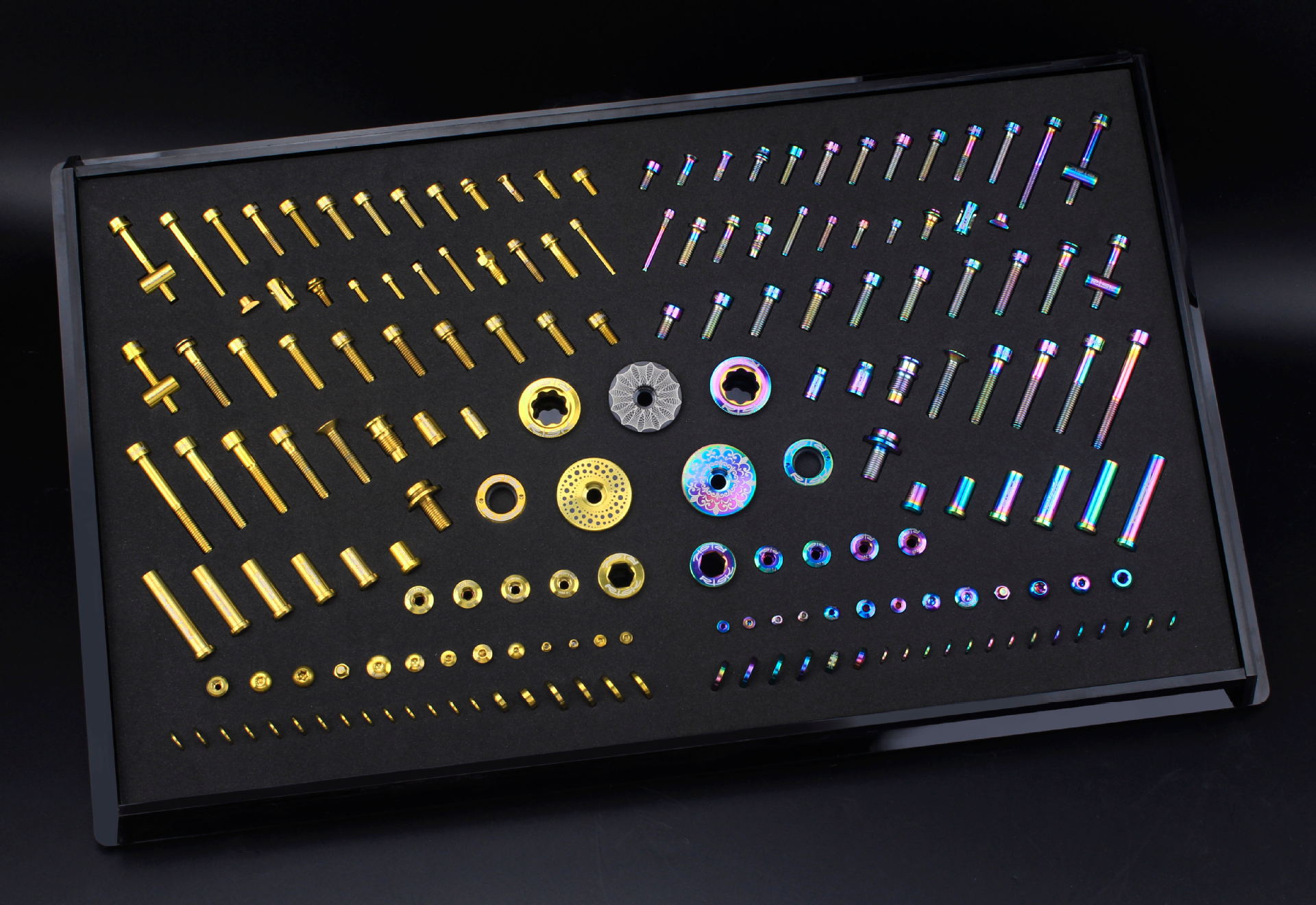
About the Manufacturer
RISK is one of the largest Chinese manufacturers of titanium fasteners specifically designed for cycling needs, with almost 10 years of in-house development and testing. A proven and popular choice of the global MTB community at affordable prices.
A unique and distinctive color range that you won't find from other manufacturers. The images are illustrative, each screw has a unique color pattern (PVD coating).
Beware of imitations!
Lifetime warranty
- applies to manufacturing defects, does not apply to damage caused by incorrect tightening torque, incorrect assembly or use beyond the recommended load
About Titan
Titanium and its alloys have excellent physical and chemical properties, resisting corrosion, temperature and other atmospheric influences. In terms of material fatigue, titanium dominates over both steel and aluminum.
Lightweight alternative to medium-strength steel screws, saving about half the weight
Color: Rainbow / OilSlick / Colorful (PVD coating)
Material of our screws: Titanium 6AL/4V(TC4) Titanium (Grade 5) - Titanium alloy with 6% Aluminum and 4% V
anadria - this combination achieves higher strength as pure titanium
Strength equivalent: medium strength steel bolts 8.8 (most commonly used steel)
If the joint requires a strength of grade 10.9 or 12.9, titanium is not recommended.
Weight: approx. 50% of the weight of steel
Non-magnetic
Installation of Titanium Screws / Bolts and their Tightening Torques
Titanium Screw Threads require the application of Titanium Joint Assembly Paste to prevent "cold welding".
Always use a torque wrench!
Recommended torques can always be found on the joint or in the instructions for use of the selected component.
Alternatively, you can use the general values in the table: